



















Are you addressing these 3 critical building management system challenges?

December 01, 2025

Share

3 essential building management challenges every facilities leader must solve

Facilities teams across the UK face mounting pressure to optimise building performance while balancing competing priorities of cost reduction, sustainability and occupant experience.

Traditional management approaches often struggle to meet modern demands as building portfolios grow more complex, so let’s examine three fundamental challenges facilities professionals must address to ensure long‑term smart building management.
 

1. Lack of a unified view into aggregated facility data

Facilities managers frequently struggle to identify improvement opportunities across their properties without a comprehensive, integrated view of operations.

Most organisations operate with fragmented systems, from energy management solutions to maintenance records and space utilisation tools, which create data silos and limit full visibility into operations.

The consequences of disconnected data are substantial:

  • Energy inefficiencies go undetected until utility bills arrive

  • Maintenance schedules follow arbitrary calendars rather than actual equipment needs

  • Space utilisation patterns remain unclear, leading to under‑used assets and unnecessary costs

  • Carbon emissions tracking becomes a manual and error‑prone process

Without this unified view, facilities managers cannot effectively benchmark performance across properties, identify best practices or implement portfolio‑wide improvements.

In a Forrester Consulting Total Economic Impact™ Study conducted in April 2025 on behalf of Johnson Controls, a workplace technology architect from a pharmaceuticals organisation noted, Our facilities managers only had insights as to how much energy their buildings used once they got the bill, which was way too late to do anything about it.”

The result is reactive management rather than proactive optimisation, limiting both operational efficiency and strategic impact.
  

2. Competitive pressures around sustainability and smart tech

The competitive landscape for commercial real estate has transformed dramatically. Smart building capabilities and sustainability metrics have evolved from nice‑to‑have features to essential qualifications.

Today’s facilities managers face mounting pressure to:

  • Reduce operational costs without compromising service levels

  • Achieve increasingly ambitious sustainability targets

  • Deliver certifications that matter to tenants and shareholders

  • Keep pace with technological innovation in building systems

Corporate tenants now routinely include smart building and green certifications to attract premium tenants. Properties without smart building capabilities and sustainability credentials command lower rental rates and experience higher vacancy rates than their certified counterparts.

According to the Forrester study, buildings with green certifications and smart technology certifications can command average rental premiums of 4% and 8%, respectively, for a composite organisation representative of interviewed customers. Organisations without a clear strategy for achieving these certifications risk falling behind competitors and experiencing declining asset values.
  

3. Shifts in workplace culture impacting space utilisation

The COVID‑19 pandemic fundamentally transformed workplace expectations and space utilisation patterns. Hybrid work models have become the norm rather than the exception, creating unprecedented challenges for facilities managers.

This cultural shift has created several operational difficulties:

  • Unpredictable occupancy patterns and peak usage times

  • Unclear space allocation for collaborative versus individual work

  • Challenges in right‑sizing real estate portfolios for hybrid workforces

  • Pressure to enhance workplace experience to attract employees back to offices

Without accurate data on how spaces are actually being used, facilities managers struggle to make informed decisions about real estate needs. Many organisations maintain expensive leases for space that remains largely unused, while others lack sufficient collaborative areas when employees are onsite.

The Forrester study found that the composite organisation realised savings on leased real estate of nearly 22%, representing millions in avoidable costs for large enterprises.

As hybrid work patterns continue to evolve, facilities managers need sophisticated tools to track utilisation while maintaining occupants’ physical and digital privacy, and to adapt space configurations to meet real‑world needs. Without these capabilities, organisations risk both financial waste and compromised employee experience.

.

How smart building technology addresses these challenges

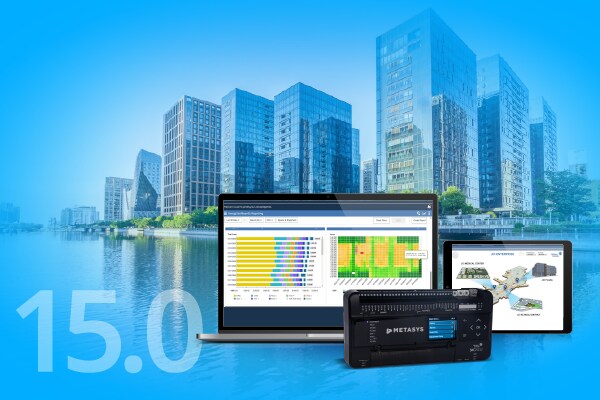
Smart building solutions such as OpenBlue directly address these critical hurdles by integrating data from multiple sources, regardless of vendor, to provide the comprehensive understanding necessary for strategic decision‑making. The Forrester study revealed that OpenBlue’s streamlined approach delivered up to 155% ROI based on a composite organisation built for the study, combining energy savings, reduced chiller service costs, real estate savings and rental premiums.

OpenBlue delivers facilities teams a unified view of building operations, helping them identify inefficiencies, benchmark performance across properties and implement portfolio‑wide improvements. It also supports critical smart building and sustainability certifications that increase appeal to premium tenants. OpenBlue offers precise workspace utilisation metrics so organisations can optimise their real estate portfolios for hybrid work models, reducing costs while enhancing employee experience.

By providing a comprehensive solution to the critical challenges building operators face today, OpenBlue empowers leaders to evolve from reactive operators to strategic business partners. This shift delivers measurable value through enhanced efficiency, sustainability and occupant experience, well into the future.

Discover more about OpenBlue and start your smart building journey today...

Unlock significant efficiency with OpenBlue

Download study

Share