




















.jpg?la=en&h=320&w=720&hash=244C75B74F0F77521D56164450973BCD)













.jpg?la=en&h=310&w=720&hash=8D9823F26AA80B2B75C3E4B2E61770DC)


.jpg?la=en&h=320&w=719&hash=13CA7E4AA3E453809B6726B561F2F4DD)
.jpg?la=en&h=306&w=720&hash=F21A7CD3C49EFBF4D41F00691D09AEAC)

.png?la=en&h=320&w=720&hash=18CFCCD916C92D922F600511FABD775D)












Predictive vs Preventive Maintenance: Which Strategy is Right for Your Building?


Both predictive and preventive maintenance aim to reduce equipment failure and unplanned downtime - but they work differently, cost differently and suit different assets. This comparison explains which approach belongs where in a commercial building maintenance strategy.
For those responsible for facility management in commercial buildings, equipment maintenance is one of the largest controllable cost areas - and one of the most consequential for occupant comfort, building safety and energy performance. The approach you take determines how often equipment fails, how long your assets last and how efficiently your building automation and controls infrastructure operates.
This guide compares predictive and preventive maintenance in a commercial building context, covers reactive maintenance (the strategy both are designed to replace), and helps facility managers decide which approach to apply to each asset type.
The three maintenance strategies: reactive, preventive and predictive
Reactive maintenance: fix it when it breaks
Reactive maintenance addresses equipment problems only after failure. It requires no upfront investment in monitoring or scheduling. In practice, it is the most expensive long-term strategy: unplanned downtime disrupts building operations, emergency repairs cost more than scheduled ones, and failures often cascade into wider equipment damage. For critical building systems - HVAC plant, fire safety, electrical infrastructure - reactive maintenance is not viable.
Preventive maintenance: scheduled, time-based servicing
Preventive maintenance (PM) is a planned, calendar-based approach. Equipment is serviced at fixed intervals - whether or not there are identifiable signs of deterioration. A typical PM programme for a commercial building includes quarterly HVAC filter changes, annual boiler inspection and lubrication schedules for rotating equipment, regular fire alarm testing and routine inspection rounds.
PM is effective and well understood. Its primary limitation is that it services equipment regardless of actual condition: a pump replaced three months ago gets the same scheduled inspection as one approaching end of life. This means some planned downtime is unnecessary, some maintenance occurs before it is needed, and genuine early-warning signs between inspection windows can be missed.
Predictive maintenance: condition-based, data-driven servicing
Predictive maintenance (PdM) uses real-time data from sensors and condition monitoring equipment to assess the actual health of assets continuously. Instead of servicing at fixed intervals, PdM systems trigger maintenance when data indicates a component is approaching failure - flagging abnormal vibration in a pump bearing, a temperature differential in a heat exchanger or an unusual current draw in a motor
In a commercial building, PdM typically relies on IoT sensors connected to a building management system or a building energy management system (BEMS) with fault detection and diagnostics (FDD) capability. The FDD layer analyses equipment trend data against expected performance parameters, flags deviations and generates maintenance alerts before failures occur. Downtime is planned and minimal, parts are replaced based on actual wear rather than calendar assumptions, and mean time between failures (MTBF) extends significantly.
Predictive vs preventive maintenance: head-to-head comparison
| Preventive maintenance | Predictive maintenance | |
|---|---|---|
| Trigger | Calendar or usage interval | Real-time condition data from sensors |
| Timing | Fixed schedule, regardless of asset condition | When data indicates a problem is developing |
| Technology required | CMMS, inspection checklists | IoT sensors, BMS/BEMS with FDD, data analytics |
| Upfront cost | Low - labour and scheduling | Higher - sensor infrastructure, system integration |
| Ongoing cost | Moderate - some over-maintenance of healthy assets | Lower long term - maintenance only when needed |
| Downtime type | Planned downtime at regular intervals | Minimal planned, very little unplanned |
| Downtime reduction | Reduces unplanned downtime vs reactive | Reduces both planned and unplanned downtime by 35-50% |
| Asset lifespan | Extended vs reactive, some unnecessary replacements | Further extended - replacement based on actual wear |
| Best suited to | Low-cost components; predictable failure rates | Critical, high-cost assets where downtime is expensive |
| Typical building use | Filter changes, lubrication, routine inspection | HVAC plant, chillers, pumps, AHUs, switchgear |
Which approach suits which building assets?
The answer for most commercial buildings is both - applied to the right assets.
Assets suited to preventive maintenance
- Air filters, belts and consumables - low-cost components with predictable replacement intervals where condition monitoring adds little value.
- Regulatory inspection tasks - fire alarm testing, extinguisher checks, emergency lighting - where schedules are mandated regardless of condition.
- Lighting and low-cost electrical components - short lifespans, inexpensive to replace, condition monitoring cost exceeds benefit.
- Routine cleaning and lubrication schedules - straightforward, time-based tasks that are low-cost to execute on a fixed calendar.
Assets suited to predictive maintenance
- HVAC plant - chillers, boilers, air handling units and heat pumps are high-cost assets where a single unplanned failure can disrupt building operations for days. IoT sensors monitoring temperature, pressure, vibration and current draw provide early warning before failures occur.
- Pumps and rotating equipment - bearing degradation, seal wear and impeller damage produce detectable signatures in vibration and noise data well before failure. Condition monitoring on these assets extends MTBF and eliminates most unplanned replacements.
- Electrical switchgear and distribution panels - thermal imaging and partial discharge detection identify developing faults in electrical infrastructure before they cause outages.
- BMS controllers and critical sensors - monitoring the health of the building controls infrastructure itself ensures the platform managing everything else remains reliable.
Implementing predictive maintenance via your BMS
For most UK commercial buildings, the pathway to predictive maintenance runs through the existing BMS controls infrastructure. A well-connected BMS already collects data from HVAC equipment, sensors and field devices. Adding a BEMS with fault detection and diagnostics turns that data into actionable maintenance alerts - flagging deviating trends before they become failures, and prioritising interventions by criticality.
The result is a maintenance programme that combines scheduled preventive maintenance for low-criticality assets with condition-based predictive maintenance for critical plant - delivering the lowest total maintenance cost and the shortest downtime across the building.
Frequently asked questions
What is the main difference between predictive and preventive maintenance?
Preventive maintenance is time-based: equipment is serviced at fixed intervals regardless of its actual condition. Predictive maintenance is condition-based: sensors and data analytics monitor equipment health in real time and trigger maintenance only when the data indicates a problem is developing. Preventive is simpler to implement; predictive delivers lower long-term costs and less downtime for critical assets.
Which is more expensive - predictive or preventive maintenance?
Preventive maintenance has lower upfront costs but higher ongoing costs from servicing assets that do not yet need attention. Predictive maintenance requires investment in sensor infrastructure and analytics platforms but reduces long-term maintenance spend by targeting interventions to actual need. For high-value assets, predictive maintenance typically delivers a favourable return within two to three years.
Can I implement predictive maintenance without replacing my existing BMS?
In most cases, yes. Modern fault detection and diagnostics platforms integrate with existing BMS infrastructure via standard protocols such as BACnet and Modbus, pulling data from existing sensors and equipment. Predictive maintenance capability can often be layered onto existing building controls rather than requiring a complete system replacement.
Do I have to choose between predictive and preventive maintenance?
No. Most effective building maintenance programmes use both - applying predictive maintenance to critical, high-cost plant where data infrastructure is justified, and preventive maintenance to low-cost consumables and regulatory inspection tasks where time-based schedules are appropriate. The goal is to match the maintenance strategy to each asset's criticality and cost profile.
Johnson Controls: building management systems with built-in fault detection
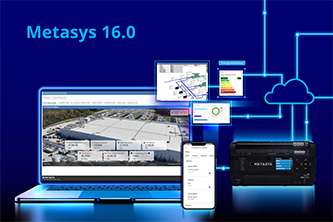
Johnson Controls' Metasys platform and building automation and controls solutions give commercial buildings the sensor connectivity, real-time monitoring and fault detection and diagnostics capabilities needed to move from preventive to predictive maintenance on critical plant. Our building management and energy management platforms flag developing equipment issues before they cause failures - reducing unplanned downtime, extending asset lifespans and lowering the total cost of maintaining your building.
Explore our building automation and controls solutions.