





















.jpg?la=en&h=320&w=720&hash=244C75B74F0F77521D56164450973BCD)














.jpg?la=en&h=310&w=720&hash=8D9823F26AA80B2B75C3E4B2E61770DC)


.jpg?la=en&h=320&w=719&hash=13CA7E4AA3E453809B6726B561F2F4DD)
.jpg?la=en&h=306&w=720&hash=F21A7CD3C49EFBF4D41F00691D09AEAC)

.png?la=en&h=320&w=720&hash=18CFCCD916C92D922F600511FABD775D)












What is a Smart Building? Technologies, Trends and the Business Case in 2026


The FM software market is crowded with overlapping terminology. Here is a clear guide to what each system type actually does and how to match one to your building.
A facility management system is the software platform that sits behind the operational running of a commercial building. It connects maintenance scheduling, asset tracking, compliance management, space utilisation and energy data into a single environment - replacing the spreadsheets, paper records and disconnected tools that most FM teams start with.
For building operators and estates directors evaluating their options, the main challenge is terminology. FMS, CAFM, IWMS and BMS all appear in procurement conversations, often interchangeably, but they describe meaningfully different things. This guide explains what each system type does, what to look for in a platform, and how building automation and controls connects with FM software to deliver a complete building management capability.
The audience for this article is facility management professionals, estates directors and building operators in UK commercial, healthcare, education and public sector organisations who are either selecting an FM system for the first time or reviewing their current platform.
1. What is a Facility Management System?
A facility management system (FMS) is a digital platform that centralises and coordinates the core operational functions of managing a building or estate. At a minimum, an FMS handles work order management, asset tracking, maintenance scheduling and compliance documentation. More advanced platforms extend into space management, energy analytics, contractor management and real estate portfolio oversight.
The shift from manual FM processes to a system-driven approach changes how facility managers spend their time. Instead of chasing paper maintenance records, coordinating work orders by phone or pulling data from multiple sources for compliance audits, the FM system provides a single operational record for the building - accessible in real time, from any device, by authorised team members.
Most UK FM operations that have adopted a management system report significant reductions in unplanned maintenance costs, shorter response times on reactive work and improved audit readiness. The system does not replace the facility manager - it removes the administrative burden that prevents effective decision-making.
2. FMS, CAFM, IWMS and BMS: What is the Difference?
These four terms are frequently used interchangeably but they describe distinct capabilities. Understanding the differences prevents both under-specifying and over-investing.
FMS - Facility Management Software
FMS is the broad category term for software that manages facility operations. It covers maintenance scheduling, asset management, work orders, compliance tracking and resource allocation. FMS platforms range from lightweight work order tools to enterprise-grade systems covering large multi-site estates. In UK procurement contexts, FMS and CAFM are often used to mean the same thing.
CAFM - Computer-Aided Facility Management
CAFM (Computer-Aided Facility Management) systems add spatial planning capability to core FM functions. Floor plan integration, space utilisation tracking and CAD connectivity allow facility managers to optimise building layouts, plan moves and reconfigurations, and manage workspace allocation. CAFM is particularly valuable in corporate offices, universities and healthcare estates where space planning is a significant operational activity.
IWMS - Integrated Workplace Management System
IWMS (Integrated Workplace Management System) is the most comprehensive category. An IWMS consolidates FM operations, real estate portfolio management, capital project management, sustainability reporting and HR/IT service delivery into a single platform. IWMS solutions are typically used by large corporate organisations, government departments and university estates managing significant property portfolios across multiple sites. The data and reporting capability is considerably more extensive than standard FMS or CAFM.
BMS - Building Management System
A building management system (BMS) is fundamentally different from the three categories above. Where FMS, CAFM and IWMS are software platforms for managing FM operations and data, a BMS is the system that directly monitors and controls the physical building services - HVAC, lighting, energy metering, access control and fire systems. A BMS operates in real time, continuously adjusting building systems to maintain defined conditions.
In a well-integrated building, the BMS and FM software work together: the BMS generates the performance data and fault alerts that inform maintenance scheduling in the FM system, and the FM system's asset records and maintenance history inform how the BMS is configured and managed.
| System | Primary Function | Key Data | Best For | Integration |
|---|---|---|---|---|
| FMS | Maintenance & work orders | Asset health, work order status | Commercial FM teams | CAFM, BMS, ERP |
| CAFM | Space planning + FM ops | Floor plans, space utilisation | Offices, universities, NHS | IWMS, FMS, BIM |
| IWMS | Enterprise portfolio management | Real estate, capital, ESG data | Large multi-site estates | ERP, HR, finance systems |
| BMS | Building services control | Real-time HVAC, energy, occupancy | Any commercial building | FMS, CAFM, IoT sensors |
3. Core Features to Look for in a Facility Management System
Regardless of which system category applies to your organisation, the following capabilities distinguish strong FM platforms from weaker ones.
- Work order management. Creation, assignment, tracking and closure of planned and reactive maintenance tasks, with mobile access for field engineers. Digital work orders replace paper-based systems and create an auditable maintenance record.
- Asset management and lifecycle tracking. A full register of building assets with service history, warranty information, planned maintenance schedules and condition data. This is the foundation for both compliance documentation and capital planning.
- Planned preventive maintenance scheduling. Automated scheduling of statutory and non-statutory maintenance tasks based on asset type, regulatory requirements and manufacturer specifications.
- Compliance and audit documentation. Automatic generation and retention of compliance records - statutory inspection certificates, risk assessments, permit-to-work documentation and service reports - in a format that supports both internal audit and regulatory inspection.
- Reporting and analytics dashboards. Real-time and historical performance data on maintenance costs, asset health, work order completion rates and energy consumption. The quality of reporting capability is one of the clearest differentiators between FM system tiers.
- Integration capability. Open APIs and standard integration protocols that allow the FM system to connect with BMS platforms, ERP and finance systems, HR and booking tools, and IoT sensor networks.
- Mobile access. Field engineers and contractors need access to work orders, asset records and compliance documentation from mobile devices on the building floor, not just from a desktop in the facilities office.
4. Key Benefits for Commercial Buildings
The most consistent operational gains from FM system implementation in UK commercial buildings fall into four areas.
Reduced unplanned maintenance costs
Moving from reactive to planned preventive maintenance reduces emergency call-out costs, extends asset lifespans and reduces the risk of operational disruption from equipment failure. FM systems that integrate with condition monitoring data from a BMS take this further, enabling predictive maintenance that addresses emerging issues before they become failures.
Improved compliance assurance
A central, auditable maintenance record significantly reduces the time and effort required for compliance audits, statutory inspection management and regulatory reporting. Organisations subject to ESOS assessments, NHS estates compliance requirements or commercial lease obligations benefit from the structured documentation that a well-configured FM system maintains automatically.
Cost transparency and budget control
FM systems provide cost visibility at asset, building and portfolio level. Maintenance spend per asset, costs per square metre and contractor performance against SLAs are all reportable. This data supports budget planning, procurement decisions and the business cases for capital investment in building services upgrades. A building energy management system connected to the FM system adds energy cost data to this picture, providing a complete operational cost view.
Better space utilisation
For organisations managing hybrid working patterns, multi-tenanted buildings or changing space requirements, FM systems with space management capability provide the occupancy data needed to make informed decisions about building layouts, desk allocation and service provision.
5. How FM Systems Integrate With Building Automation
The most effective building operations combine FM software with a connected BMS controls layer. The BMS generates continuous performance data from the building's physical systems - HVAC, lighting, access, energy metering - and the FM system uses that data to drive maintenance scheduling, compliance documentation and energy reporting.
In practice, this integration works in both directions. When the BMS detects a fault or performance anomaly - a chiller running outside its efficiency threshold, a zone failing to reach setpoint temperature - it can automatically generate a work order in the FM system, assign it to the appropriate engineer and log the response time and resolution. The FM system's asset register informs the BMS configuration: service history, equipment age and condition data help building operators set appropriate performance thresholds and maintenance intervals.
Buildings that have achieved this level of integration consistently outperform those running FM software and BMS in parallel but disconnected. The operational overhead is lower, the data quality is higher and the reporting capability - for energy, compliance and cost purposes - is significantly better.
6. How to Choose the Right Facility Management System
The right FM system depends on four factors: the scale and complexity of your estate, your current operational processes, your integration requirements and your reporting obligations.
- Single-site commercial buildings. A standard FMS or CAFM platform will cover most operational requirements. Prioritise ease of use, mobile access and BMS integration capability over breadth of features you are unlikely to use.
- Multi-site estates or large single buildings. CAFM or entry-level IWMS platforms offer the space management, contractor management and reporting capability that complex operations require. Integration with finance and HR systems becomes more important at this scale.
- Large corporate or public sector portfolios. IWMS is the appropriate category. Look for platforms with strong real estate portfolio management, capital project support, ESG reporting and open integration standards. Procurement is typically a significant process with a long evaluation cycle.
- Healthcare and education estates. Compliance documentation, statutory inspection management and audit trail integrity are critical. Sector-specific experience from the FM system provider is a meaningful differentiator - generic platforms often require significant configuration to meet NHS or higher education requirements.
Regardless of system category, evaluate integration capability with your existing BMS as a priority requirement. An FM system that cannot connect to the building's automation layer limits the operational value of both platforms. Open protocol support - BACnet, REST APIs, standard data formats - should be a baseline expectation, not an optional extra.
Frequently Asked Questions
What is the difference between FMS and CAFM?
FMS (Facility Management Software) is the general category for platforms covering maintenance, asset management, work orders and compliance. CAFM (Computer-Aided Facility Management) is a specific type of FMS that adds spatial planning capability - floor plan integration, space utilisation tracking and occupancy management. In practice, the two terms are used interchangeably in many UK procurement contexts, but CAFM implies a stronger emphasis on physical space management.
Does a facility management system replace a BMS?
No - they serve different functions and work best in combination. An FM system manages operational processes: work orders, asset records, maintenance scheduling and compliance documentation. A building management system monitors and controls the physical building services - HVAC, lighting, energy metering - in real time. The two systems are most effective when integrated, with the BMS providing performance data that informs FM maintenance scheduling and energy reporting.
What is an IWMS and when do I need one?
An Integrated Workplace Management System (IWMS) combines FM operations, real estate portfolio management, capital project management, sustainability reporting and HR/IT service delivery in a single platform. IWMS is appropriate for large organisations managing significant property portfolios across multiple sites - typically large corporates, government departments, NHS trusts or university estates. Smaller single-site operations will find standard FMS or CAFM platforms better suited to their requirements.
How much does a facility management system cost?
FM system costs vary significantly by platform, deployment model and organisation size. Cloud-based SaaS solutions typically charge on a per-user or per-site basis, with annual subscription costs ranging from a few thousand pounds for basic single-site platforms to six figures for enterprise IWMS deployments. Implementation, configuration and training costs add to the total cost of ownership and should be included in any comparison. Open-source and entry-level platforms exist but typically lack the integration capability and sector-specific compliance features that most commercial FM operations require.
How long does it take to implement a facility management system?
Implementation timelines range from a few weeks for cloud-based FMS platforms with limited integration requirements to 12-18 months for enterprise IWMS deployments with complex ERP and BMS integration. The most common cause of delayed implementations is data quality: asset registers that are incomplete or inaccurate, maintenance records that do not transfer cleanly and compliance documentation that requires manual review before it can be migrated. Investing in data preparation before implementation significantly reduces deployment risk.
Connect Your FM System to Your Building
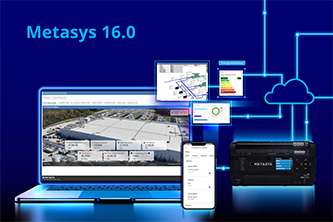
Johnson Controls delivers building automation and controls that integrates with the facility management systems used by commercial, healthcare, education and public sector estates across the UK. Our Metasys BMS platform provides the real-time building performance data that FM software needs to move from reactive to predictive operations - covering HVAC, energy metering, lighting, access control and fault detection.
If you are evaluating FM systems, upgrading your BMS or looking to connect the two more effectively, speak to our team. Visit building automation and controls to find out more.