














.jpg?la=en&h=320&w=720&hash=244C75B74F0F77521D56164450973BCD)












.jpg?la=en&h=310&w=720&hash=8D9823F26AA80B2B75C3E4B2E61770DC)
.jpg?la=en&h=320&w=719&hash=13CA7E4AA3E453809B6726B561F2F4DD)
.jpg?la=en&h=306&w=720&hash=F21A7CD3C49EFBF4D41F00691D09AEAC)

.png?la=en&h=320&w=720&hash=18CFCCD916C92D922F600511FABD775D)










Why Corporate Cyber Security Matters for Modern Businesses


Corporate cyber security is now a core part of modern business protection. As organisations become more connected, digitised and reliant on smart technologies, the boundary between physical security and digital security is becoming increasingly blurred.
For many businesses, cyber risk is no longer confined to laptops, servers, emails or internal IT networks. Connected buildings, access control systems, video surveillance, intrusion detection, alarms, monitoring platforms and commercial security systems can all form part of a wider business security system. When these systems are connected, they can help organisations operate more efficiently, but they also need to be managed securely.
That is why corporate cyber security should be viewed as a business-wide priority, not just an IT responsibility. Protecting people, property, data, assets and operations requires a joined-up approach that considers both physical and digital security.
For businesses looking to strengthen resilience, working with experienced security specialists and trusted cyber security providers can help ensure that protection strategies are practical, scalable and aligned with real operational risks.
What Is Corporate Cyber Security?
Corporate cyber security refers to the strategies, technologies, processes and controls used to protect an organisation’s digital systems, business data and connected infrastructure from unauthorised access, disruption or misuse.
For modern organisations, this can include protecting:
- Customer, employee and supplier data
- Business-critical software and communication systems
- Connected security systems and smart building technology
- Access control platforms and user credentials
- Video surveillance systems and monitoring tools
- Networks, cloud platforms and remote access points
- Operational continuity and business resilience
Cyber security is closely linked to data protection, compliance awareness and security risk management. However, it should also be connected to wider business security planning. A cyber incident can affect physical operations, just as a weakness in physical security can create digital risk.
For example, if unauthorised individuals gain access to secure areas, they may also be able to access network equipment, security control rooms, servers, devices or sensitive documentation. Equally, if connected security systems are not properly protected, this can create vulnerabilities across a commercial site.
Effective cyber security, therefore, considers the whole organisation, including people, processes, technology and the built environment.
Why Corporate Cyber Security Is Now a Business Priority
The way organisations operate has changed significantly. Many businesses now use hybrid working models, cloud-based systems, smart devices, connected buildings and integrated platforms to manage daily operations. These developments can improve efficiency, visibility and control, but they also increase the need for secure, well-managed systems.
Corporate cyber security has become a priority because modern businesses are more connected than ever before. A single commercial site may include access control, CCTV, intrusion detection, visitor management, building management systems, fire safety systems, alarms and remote monitoring. Each connected component has a role to play in protecting the organisation, but each must also be properly managed.
For business owners and facilities managers, this means security can no longer be viewed in separate categories. IT teams, security managers, property managers and operational leaders all need to understand how digital and physical risks overlap.
A strong corporate cyber security strategy can help businesses:
- Protect sensitive information and operational systems
- Reduce the likelihood of unauthorised access
- Improve visibility across commercial environments
- Support safer hybrid and remote working practices
- Strengthen resilience across multiple sites
- Improve confidence in connected security systems
- Support wider security risk management objectives
This is particularly important for organisations with multiple buildings, high-value assets, regulated environments, large workforces or complex access requirements. As technology becomes more embedded in the workplace, businesses need security solutions that can adapt to changing risks.
The Link Between Cyber Security and Physical Security
Corporate cyber security should not sit separately from physical security. The two are now closely connected, particularly in commercial environments where security technology is increasingly integrated.
Access control systems, for example, help manage who can enter specific areas of a building. These systems may use cards, fobs, mobile credentials, biometric readers or cloud-based management tools. If properly secured and managed, they support both physical and digital protection by reducing unauthorised access and creating an auditable record of movement across a site.
Video surveillance also plays a key role in modern business security. CCTV systems can help deter unwanted activity, support incident investigation, and provide real-time visibility across commercial premises. However, because many video surveillance systems are now networked, they must be considered as part of a wider corporate cyber security strategy.
Businesses should consider questions such as:
- Who has access to security platforms and credentials?
- Are systems regularly updated and maintained?
- Are connected devices configured securely?
- Is there a clear process for responding to security incidents?
By bringing together physical and digital security, organisations can create a more complete approach to risk reduction. This helps ensure that people, property, systems and data are protected through a coordinated strategy rather than disconnected measures.
How Integrated Security Solutions Help Reduce Risk
Integrated security solutions play an important role in helping businesses manage risk across complex commercial environments. Rather than relying on disconnected systems, integration allows different layers of protection to work together more effectively.
For example, access control, video surveillance, intrusion detection and monitoring can be combined to provide a clearer picture of activity across a site. If an alarm is triggered, video footage may help verify the event. If unauthorised access is attempted, the system can help identify when and where the issue occurred. If a business operates across multiple locations, centralised platforms can support greater consistency and control.
We provide security solutions designed to help organisations protect people, property and assets through integrated, technology-led security. Integrated security systems can also make security management more efficient. Instead of managing separate tools in isolation, businesses can benefit from coordinated systems that support faster decision-making, clearer reporting and more consistent control.
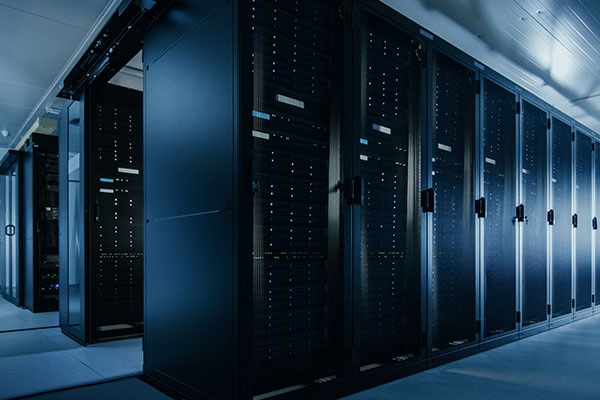
This is especially relevant for organisations operating across diverse commercial environments, from offices and warehouses to healthcare sites and retail units. Where the physical spaces themselves are part of the digital risk picture. Server rooms, security control rooms and data storage areas all require physical protection as a foundation for any cybersecurity strategy.
For organisations focused on long-term resilience, this integration can be especially valuable. It allows security to evolve with the business, whether that means expanding to new sites, adapting to hybrid working, strengthening monitoring or improving the protection of high-risk areas.
Corporate Cyber Security Requires a Connected Approach
As businesses become more connected, the risks they face are no longer limited to traditional IT systems. Access control, video surveillance, intrusion detection, monitoring platforms and commercial security systems all need to be considered as part of a wider security strategy.
By aligning physical and digital security, businesses can create a stronger, more resilient approach to protection. This helps reduce vulnerabilities, improve visibility, support data protection and strengthen security risk management across commercial environments.
Why Choose Johnson Controls for Business Security?
At Johnson Controls, we bring together expertise across physical security, connected systems and commercial risk management, making us well placed to support organisations that need a cohesive, long-term strategy rather than a single product or isolated fix. We help businesses think strategically about how different layers of security work together.
Our integrated approach simplifies security management and builds confidence across the organisation. Rather than treating corporate cyber security, physical security and commercial security as separate concerns, we help you understand how these areas connect and how to protect against the risks that sit between them.
This is particularly valuable for organisations with:
- Multiple sites or growing property portfolios
- High-value equipment, stock or sensitive assets
- Controlled access requirements
- Hybrid workplaces or flexible occupancy patterns
- Complex commercial premises
- A need for scalable, future-ready security systems
- Existing systems that require modernisation or integration
Whatever the size or complexity of your organisation, as a cyber security provider, we work with you to understand your risks, identify the right technologies and build a security strategy designed for long-term resilience. Our approach is professional, practical and always focused on protecting what matters most: your people, your property, your data and your operations.