





















.jpg?la=en&h=320&w=720&hash=244C75B74F0F77521D56164450973BCD)














.jpg?la=en&h=310&w=720&hash=8D9823F26AA80B2B75C3E4B2E61770DC)


.jpg?la=en&h=320&w=719&hash=13CA7E4AA3E453809B6726B561F2F4DD)
.jpg?la=en&h=306&w=720&hash=F21A7CD3C49EFBF4D41F00691D09AEAC)

.png?la=en&h=320&w=720&hash=18CFCCD916C92D922F600511FABD775D)












Building Management System Companies in the UK: How to Choose the Right Partner


The UK market for building management system companies has grown significantly in recent years. Regulatory pressure, rising energy costs and net zero commitments have pushed building owners and estates teams to take control of their building services - and the BMS sits at the centre of that. Choosing the right partner is as important as choosing the right technology.
This guide is aimed at facility managers, estates directors and procurement teams responsible for selecting a BMS provider. It covers what a BMS company should be able to deliver, the questions worth asking during evaluation, and how to distinguish between providers. For organisations that want a broader overview of the technology first, our guide to building management system covers the fundamentals. Johnson Controls delivers building automation and controls across the UK for organisations of all sizes.
1. What Does a BMS Company Actually Do?
A building management system company designs, installs, commissions and maintains the systems that monitor and control a building's mechanical and electrical services - primarily HVAC, lighting, energy metering and access. The scope of work varies significantly between providers, which is one reason why like-for-like comparison during procurement can be difficult.
At the simpler end, some companies supply and install a pre-configured system and hand over to the building's in-house team. At the other end, a managed service provider takes on ongoing monitoring, optimisation and maintenance as part of a service contract. Most organisations sit somewhere in between, requiring a system that integrates with existing infrastructure and a partner who can provide support when issues arise.
A BMS typically controls 60-80% of a building's energy consumption. The quality of the installation and the ongoing support arrangement directly determines whether that potential is realised or wasted. A poorly configured building management system running in override mode delivers almost none of the efficiency gains a well-specified system would achieve.
2. Types of BMS Provider in the UK
The UK market includes several distinct categories of BMS company. Understanding which type of provider you are dealing with helps set expectations for scope, capability and commercial model.
OEM manufacturers and their approved partners
The major BMS platforms - including Johnson Controls Metasys, Schneider Electric EcoStruxure, Siemens Desigo, Trend and Honeywell - are typically installed and supported through a network of approved partners and their own direct teams. OEM-aligned providers have deep product knowledge and access to proprietary configuration tools, but may be limited to a single platform.
Independent BMS integrators
Independent integrators work across multiple platforms and use open protocols such as BACnet, Modbus and KNX to connect systems from different manufacturers. This flexibility is useful for complex buildings with legacy equipment or where multi-vendor integration is required. The trade-off is that some independent providers have shallower product expertise on any single platform.
Facilities management companies with BMS capability
A number of larger FM providers - including Mitie, Veolia and similar - offer BMS installation and management as part of a broader facility management contract. This can simplify procurement and accountability, but the BMS element may be subcontracted to a specialist partner rather than delivered in-house.
Energy and sustainability consultancies
Some consultancies approach BMS from an energy management angle, pairing system installation with a building energy management system strategy and ongoing energy monitoring. This model suits organisations with strong sustainability targets where the BMS is primarily a tool for carbon and cost reporting rather than operational control alone.
3. What to Look for When Choosing a BMS Partner
Beyond price, the following criteria distinguish strong BMS partners from weaker ones.
Integration capability
The ability to integrate with your existing building services and infrastructure is non-negotiable. A BMS company should be able to connect to your HVAC, lighting, metering, fire and access systems using appropriate protocols. If you have a specific platform requirement - or an existing installation that needs to be extended - ask for evidence of similar integration work. Strong BMS controls capability across multiple protocols is a meaningful differentiator.
Commissioning and handover quality
Many BMS problems originate in poor commissioning. Systems that are not correctly set up for the building's actual usage patterns waste energy from day one. Ask providers for their commissioning process, what documentation is handed over, and whether operator training is included. A BMS that your in-house team cannot use effectively is a significant ongoing cost.
Ongoing support and maintenance
Building management systems require ongoing support - software updates, sensor calibration, schedule optimisation and fault resolution. Evaluate the support contract structure carefully: response times, out-of-hours cover, remote access capability and the escalation path for system failures. BMS downtime in a hospital, data centre or large commercial building can have serious operational consequences.
Energy analytics and reporting
Modern BMS platforms produce substantial volumes of data on energy consumption, system performance and occupancy patterns. The best providers offer dashboard tools and regular reporting that translate raw data into actionable insights. If your organisation has ESOS obligations, net zero targets or ESG reporting requirements, confirm that the BMS company can support these with appropriate analytics and audit trails.
Sector experience
BMS requirements vary significantly between sectors. A hospital BMS must provide 24/7 reliability with specific environmental controls for wards and theatres. A multi-tenant commercial building needs sub-metering for tenant billing. An education estate prioritises air quality and occupancy scheduling. Choose a provider with direct experience in your sector rather than assuming their general capability transfers.
4. Key Questions to Ask During Procurement
Use these questions when evaluating BMS providers:
- Which BMS platforms do you work with, and are you an approved partner or independent integrator?
- Can you provide references from similar buildings in our sector?
- What protocols do you use for integration with third-party systems?
- How is the system commissioned, and what documentation is included in the handover?
- What does the support contract include - remote monitoring, on-site response times, out-of-hours cover?
- How do you handle firmware updates, cybersecurity patches and system upgrades?
- Can the system integrate with our existing CAFM or energy management platform?
- What reporting and analytics capability is built into the system or available as an add-on?
5. Red Flags to Watch For
Not all BMS companies operate to the same standard. The following should prompt closer scrutiny during evaluation:
- Proprietary lock-in without justification. A provider who can only maintain their own installation and uses proprietary protocols that no other engineer can access is creating long-term dependency. Open protocol standards such as BACnet and Modbus exist precisely to prevent this.
- Vague commissioning and handover processes. If a provider cannot clearly describe their commissioning methodology and what documentation you will receive at handover, that is a significant risk.
- No sector-specific references. Generic case studies do not demonstrate capability in your specific building type. Request references from organisations with comparable building complexity.
- Limited remote monitoring capability. A BMS company that relies entirely on reactive, on-site-only fault response is not well-positioned to help you optimise energy consumption or reduce downtime.
- Underestimating integration complexity. Providers who dismiss integration questions or promise easy compatibility without detailed scoping have typically not assessed the real integration challenge.
Frequently Asked Questions
What is the difference between a BMS company and a BAS company?
The terms are often used interchangeably in the UK market. A building management system (BMS) typically refers to the broader centralised platform that manages and monitors all building services. A Building Automation System (BAS) is often used to describe systems with a stronger emphasis on automation of specific services. In practice, most UK providers use both terms, and the distinction matters less than the scope and capability of the system being proposed.
How much does a BMS installation cost in the UK?
BMS installation costs vary significantly based on building size, complexity, the number of systems being integrated and whether the project is a new installation or a retrofit. Indicative ranges start from around £20,000 for a small, single-system installation and can reach six figures for large, multi-zoned commercial or healthcare buildings. Ongoing maintenance contracts add to the total cost of ownership and should be factored into any procurement decision.
How do I know if a BMS company is reputable?
Look for verifiable sector references, approved partner status with major BMS platform manufacturers, and clear documentation of their commissioning and support processes. Membership of industry bodies such as CIBSE, BESA or the Controls Industry Association (CIA) provides an additional indicator of professional standards. Testimonials from comparable organisations in your sector carry more weight than generic case studies.
Can a BMS company help with ESOS compliance?
Yes, a well-configured BMS with strong energy analytics capability can provide the metered data and reporting required for ESOS assessments. Some providers combine BMS installation with an energy management service or a building energy management system that directly supports ESOS and net zero reporting. Confirm this capability explicitly during procurement if it is a requirement.
What ongoing support should I expect from a BMS partner?
A strong support contract should include remote monitoring with defined alert response times, scheduled preventative maintenance visits, software and firmware updates, access to technical support during business hours and ideally out-of-hours, and a clear process for major fault resolution. Annual system optimisation reviews - where schedules, setpoints and control strategies are assessed against actual building usage - are a meaningful add-on that many organisations undervalue.
Work With a BMS Partner That Knows Your Building
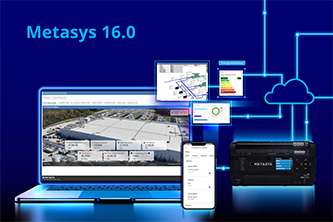
Johnson Controls has delivered building automation and controls for commercial, healthcare, education and public sector buildings across the UK for decades. Our Metasys BMS platform integrates HVAC, lighting, energy metering and access controls into a single management environment, supported by our engineering teams and backed by a full service and maintenance offering.
Whether you are specifying a new installation, upgrading an existing system or looking for a more responsive support partner, speak to our team. Visit building automation and controls to find out more.